AI-first design
AI consultant for design and product teams: go AI-first without losing the craft.
I'm Devin Pickering, a design leader and AI design consultant. I've taken the design org at a multi-billion-dollar company AI-first, built production AI agents that removed real hours from real workflows, and founded an AI-native company from zero. If your team is trying to figure out what AI actually means for how you design and deliver products, and you want someone who has done it rather than just talked about it, that's what I do.
Selected work
Signs your team is falling behind on AI.
A few real signals. Your designers are quietly using AI tools you never sanctioned, with no shared standards. Your competitors are moving faster and you can't quite explain how. Leadership keeps asking about your AI plan and the answers stay vague. Research and exploration are getting skipped for lack of time, even though AI could give that time back.
Or you tried a few AI tools, got mixed results, and concluded it's overhyped, when the real problem was no strategy behind the adoption. If any of those land, you're not hopelessly behind yet, but the gap compounds quietly. The cost of waiting is a team that has to catch up later, under pressure, instead of leading now on its own terms.
The five-question self-check
- Does every designer have a sanctioned AI tool they use weekly, with shared standards for what good output looks like?
- Can you name one workflow where AI measurably cut cycle time, with a before and after number?
- Does your review process still catch AI-generated blandness before it ships?
- Does everyone know which client and user data may go into which tool, and which may not?
- Is one person accountable for the design org’s AI roadmap, by name?
Five yes answers: you are ahead, keep going. Three or fewer: there is real upside sitting on the table, and getting it is a direction problem, not a tooling problem. That is very fixable.
Getting the whole team to actually adopt it.
The hardest part of AI-first design isn't the tools, it's adoption. People snap back to old habits the moment the workshop ends. I focus on the things that make a new way of working stick: starting with the workflows people already hate so the value is obvious, building the tooling into the path of least resistance instead of bolting it on as an extra step, and setting clear standards for where AI is trusted and where it isn't.
Most of all, I make the early wins visible, so the team pulls the change rather than having it pushed on them. Transformation that lives in a slide deck is worthless. I care about the version that's still running, and still improving the work, six months later.
Who this is for.
This is for product and design teams that know AI matters but are stuck between hype and paralysis. Maybe leadership keeps asking what your AI strategy is and you don't have a real answer. Maybe your designers are already using AI tools with no standards or guardrails. Maybe you've watched competitors move faster and you can't quite see how. I help teams move from anxious, scattered experimentation to a deliberate, AI-first way of working, where the technology makes the work genuinely better and faster instead of just louder.
It works whether you're a five-person startup trying to punch above your weight or a fifty-person design org that needs to modernize without grinding to a halt. The specifics differ, but the job is the same: figure out where AI earns its place, prove it, and make it stick.
AI that churns out junk faster is not progress.
How AI is reshaping the design workflow.
AI is changing every stage of how products get made, and each stage has a trap. In research, it can synthesize interviews and surface patterns in hours instead of weeks, but it will confidently invent themes that were never there, so a human has to keep it grounded. In ideation and design, it generates variations and first drafts fast, which is freeing if you treat them as starting points and dangerous if you release them unexamined.
In prototyping, it can stand up a working front-end from a description, collapsing the distance between an idea and something you can actually put in front of a user. And in production, agents can absorb the repetitive, rule-based work that quietly burns out your best people. I help your team capture those gains stage by stage, with the judgment calls kept firmly where they belong: with the humans.
What I will not do.
Some teams don’t need an AI transformation, and I’ll say so. I'll tell you where AI genuinely helps and where it's a distraction, and I'd rather build one agent that removes real pain than a dozen demos that dazzle in a meeting and die the next week.
I won't replace your designers' judgment with a model, and I won't help you push out lower-quality work faster and call it innovation. The entire point of AI-first design is leverage with the bar held high, not a race to the bottom run at double speed. If that's the kind of partner you want, we'll get along.
What an AI design consultant actually does.
A workshop and a deck rarely change how a team works on Monday. I help your design and product team adopt AI as a new material to design with, the way they once learned mobile or the web, inside the real workflow, not in a one-off training.
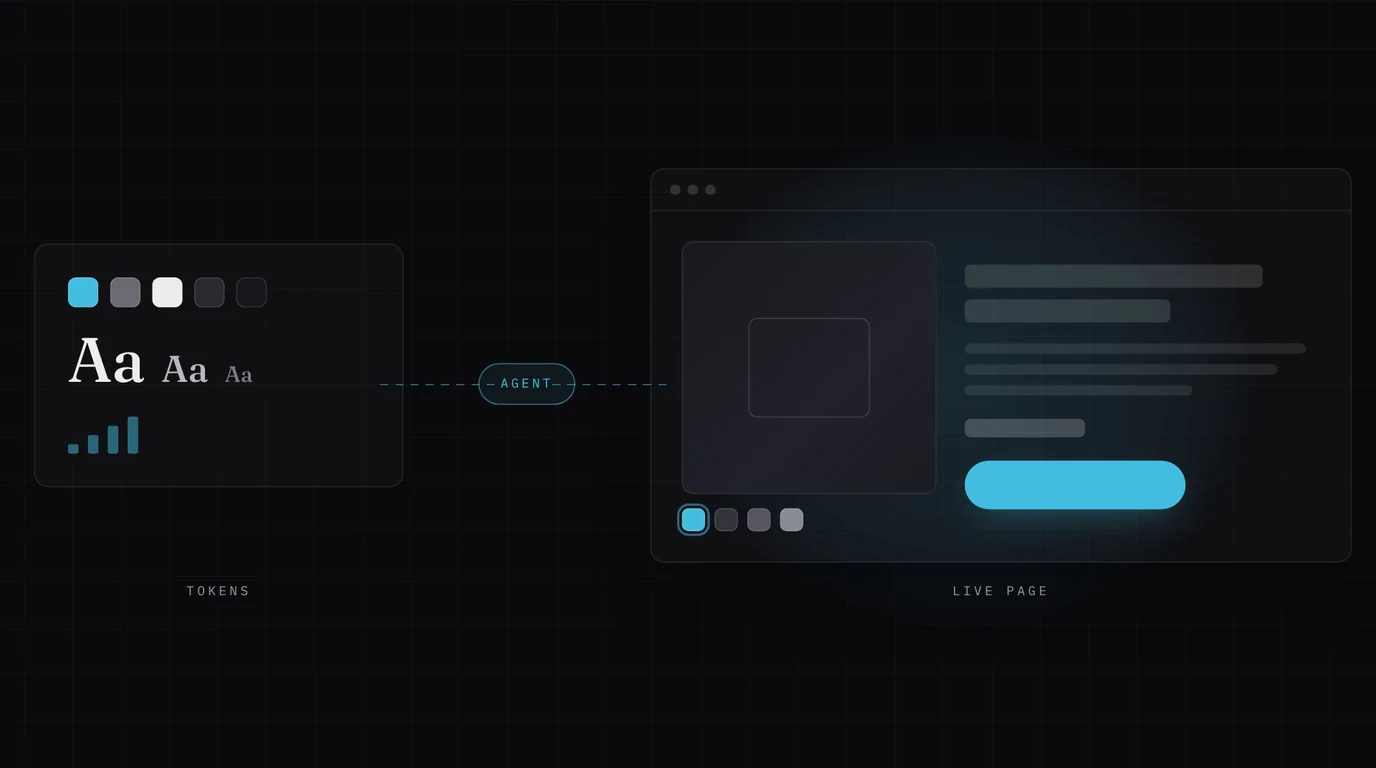
Concretely, that means auditing where AI genuinely speeds your team up versus where it quietly degrades quality, standing up an AI design and prototyping stack your team will actually use, building agents that remove repetitive work, and keeping humans in the loop on the decisions that matter. I set the strategy and then sit down and build the prototype that proves it.
Proof, not promises.
I built an AI agent that cut a major recurring workflow from weeks to under an hour inside a multi-billion-dollar apparel company, and I drive its AI adoption alongside the AI enablement team. I authored the AI vision and roadmap for that company. See that work.
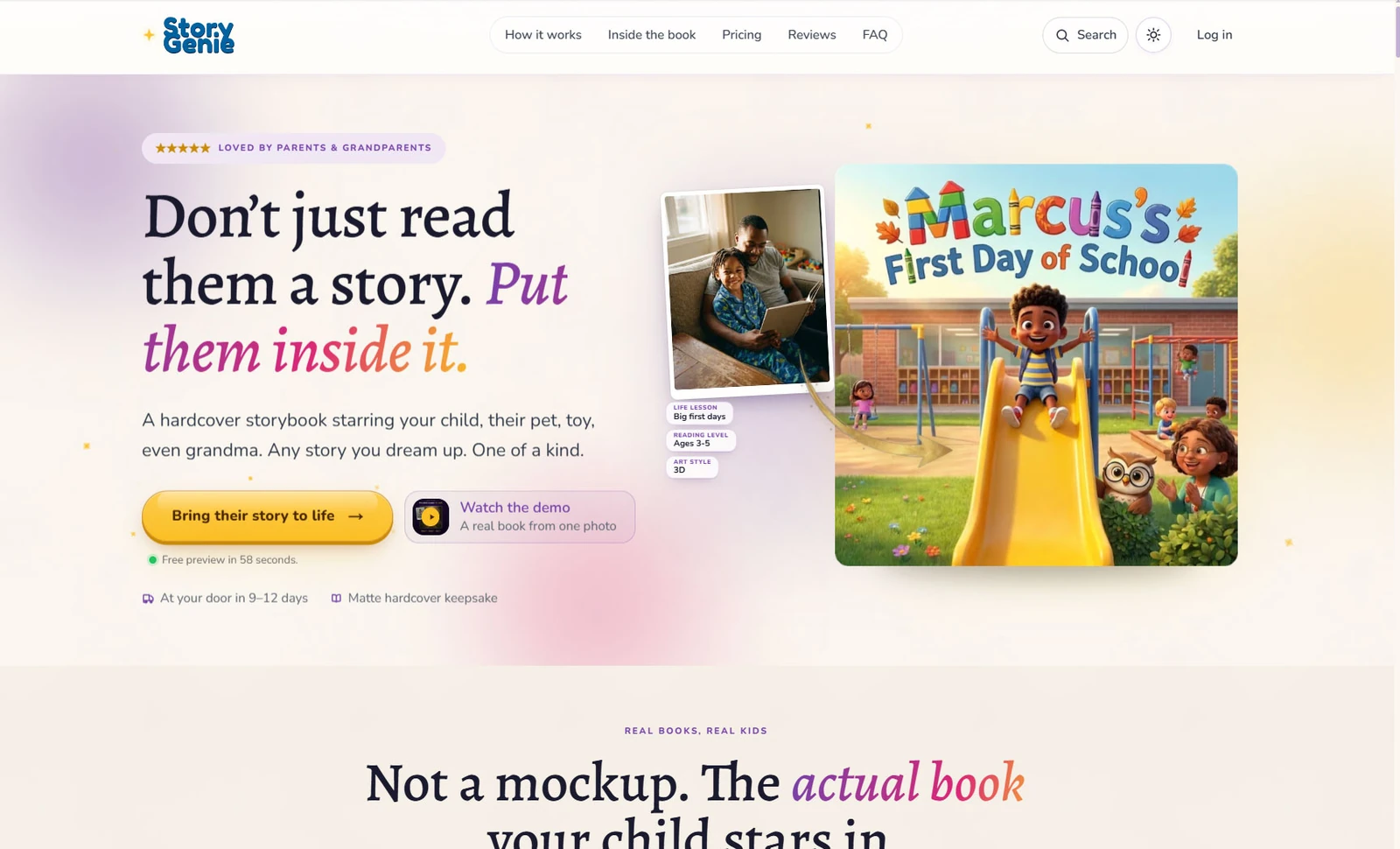
I founded Story Genie, an AI-native company where AI agents write and illustrate personalized hardcover children's books while humans supervise, live and delivering today.
I’m a designer first, and I use these tools every day. I switch models by task, and on anything that matters I send the same plan to several and keep where they agree, rather than trusting the first answer. That is the habit I teach teams: AI output is a draft to judge, not a result to ship.
AI-first design transformation, step by step.
It usually runs like this: understand the real bottlenecks, pick the few highest-leverage places AI helps, prove each one with a working prototype, then roll it out with training and guardrails so the team genuinely adopts it. I measure adoption and outcomes, not vibes.
The goal is never "we use AI now." It's a team that delivers better products faster, with judgment still firmly in human hands. AI that lets you push out mediocre work at twice the speed is not progress, and I'll tell you so.
Why now, and why me.
AI is the biggest shift in how products get made in a generation. The teams that win treat it as a craft to lead, not a threat to fear. The gap between good and great is no longer technical skill, it's curiosity and the willingness to build, and the people most at risk are the ones waiting for permission.
Very few people lead design at a senior level and drive AI transformation at the same time. I'm one of them, which is exactly why this combination is the work I take on. If you also need someone to lead the broader design org, see how I lead design teams.
Ways to work together.
Advisory and fractional, through my agency Surf Studios (opens in new tab): I embed with your team to set the AI design strategy and build the first agents. Full-time, as a design and AI leader who owns the craft and the AI roadmap, see my resume. Or project work, a specific AI-assisted feature or internal tool, designed and delivered, see my agency work.
Common questions.
- What does an AI design consultant do?
- An AI design consultant helps your design and product team adopt AI in the real workflow: setting strategy, standing up tooling, building agents, and keeping humans in the loop, with delivered results rather than a workshop and a deck.
- What is AI-first design?
- AI-first design means treating AI as a default material in how you research, design, and deliver, not a side experiment, while keeping human judgment on the decisions that matter.
- Will AI replace designers?
- No. AI changes how designers work and raises the bar; the people most at risk are the ones who refuse to use it. I help teams adopt AI without losing craft.
- Have you actually built AI products, or just advise?
- Both. I built production AI agents inside a multi-billion-dollar apparel company and founded an AI-native company. This is not theory.
- Do you do AI strategy or hands-on building?
- Both. I set the strategy and build the prototypes that prove it, which is the only way the strategy survives contact with reality.
- How do we start?
- Send me a note on the contact page and I will come back to you with times.
Tell me where AI could move the needle for your team, and where it scares you. I answer everything, and you'll hear back from me.
Tell me about your project